Roots of Regeneration
Intro
Light Installation
Light Installation
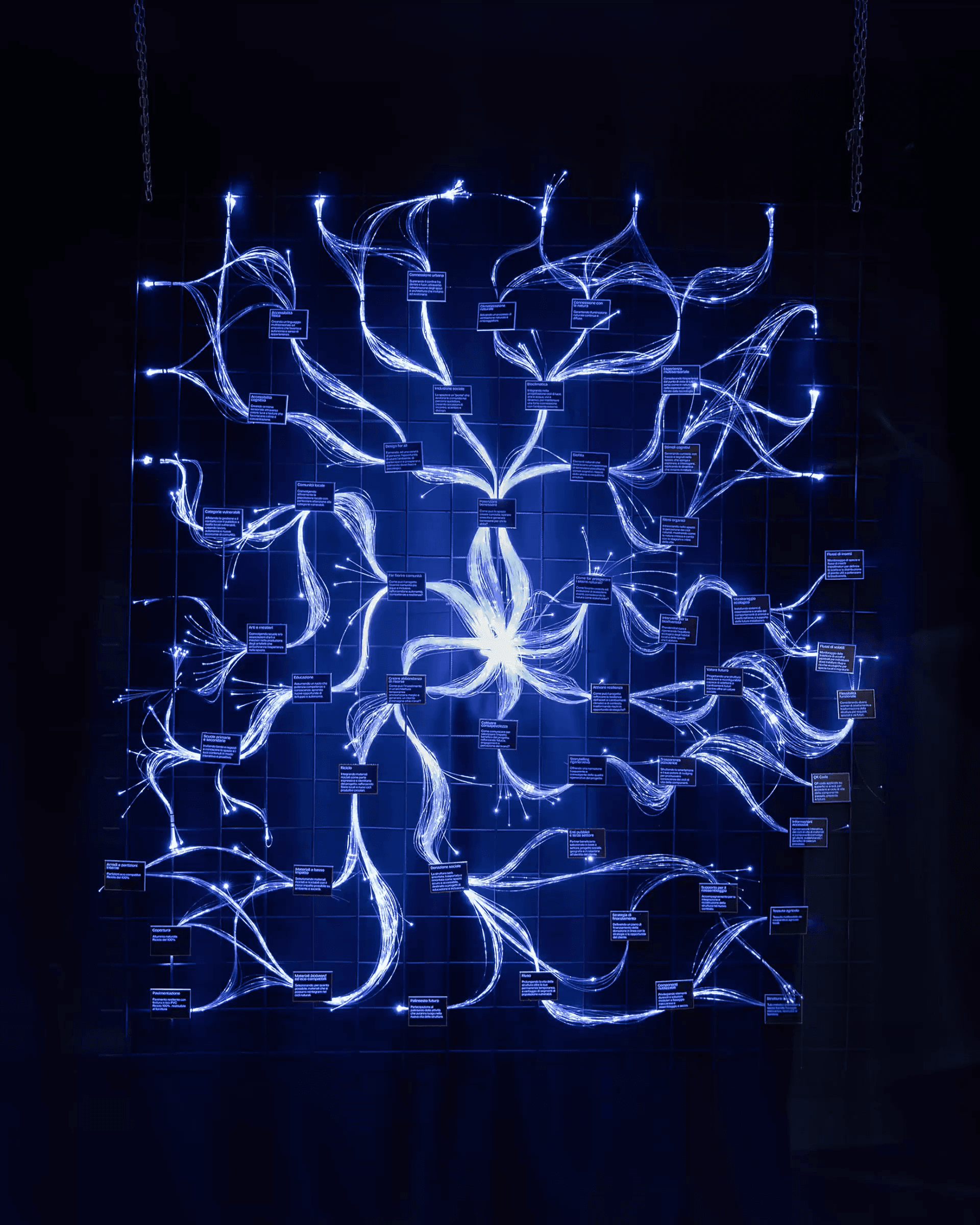
Commissioned by Il Prisma research team, this immersive light installation serves as a physical "landing" for a year-long study on regenerative architecture. Moving beyond the static nature of a thesis or book, the research is reimagined as a living organism.
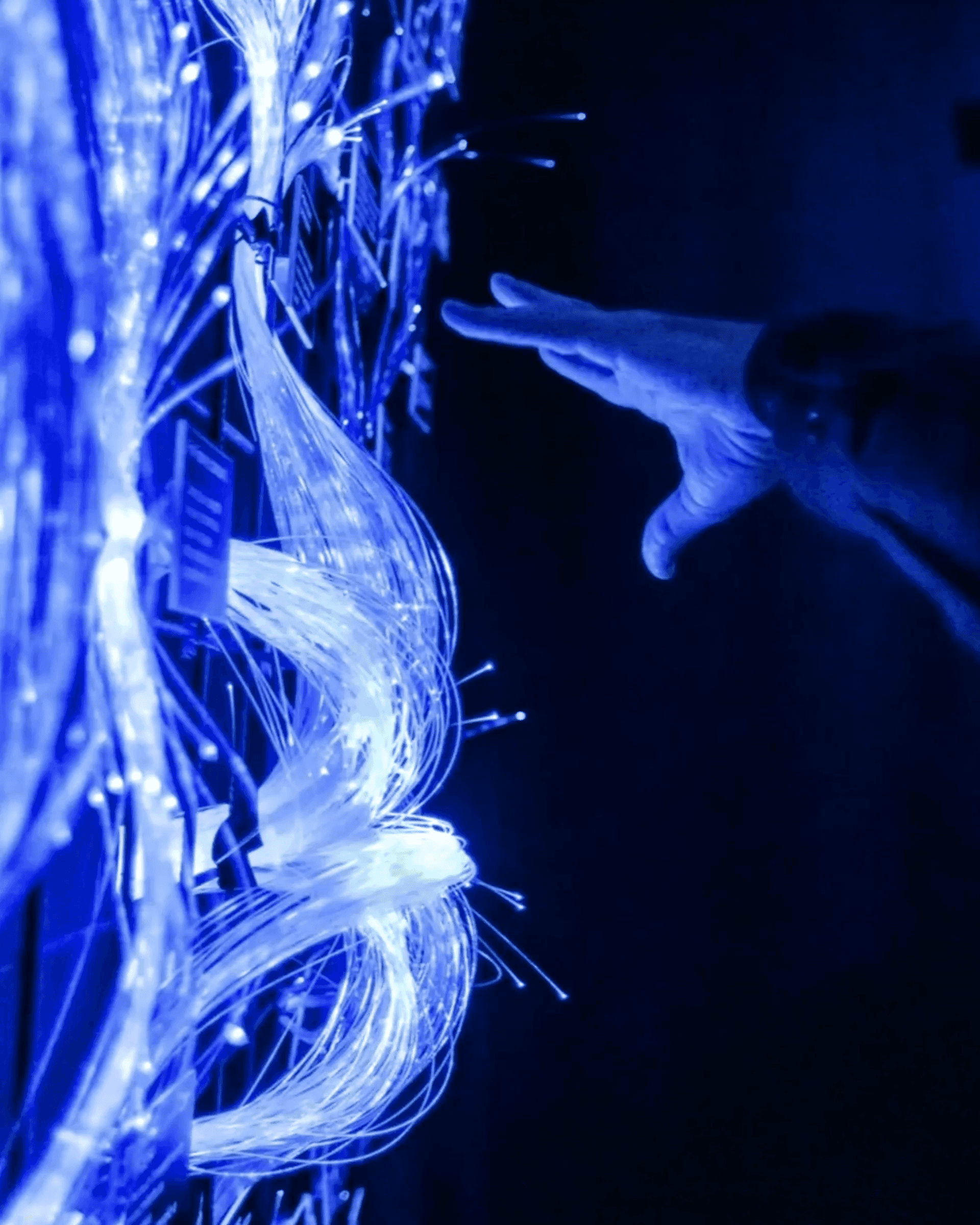
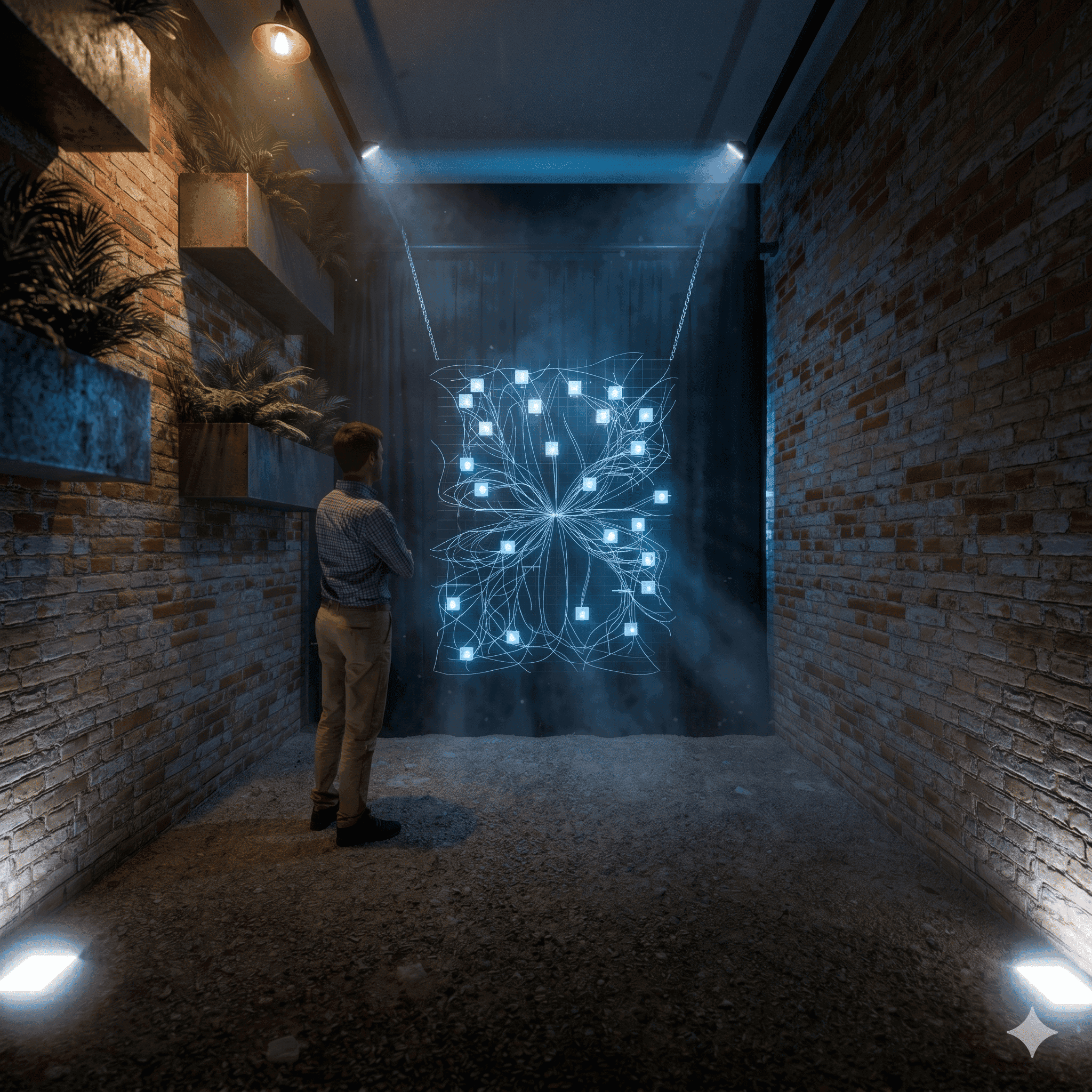
At its core lie six fundamental questions regarding societal, environmental, and human impact. From this center, fiber optic filaments pulse outward, guiding visitors through a branching ecosystem of answers that lead to deeper inquiries.
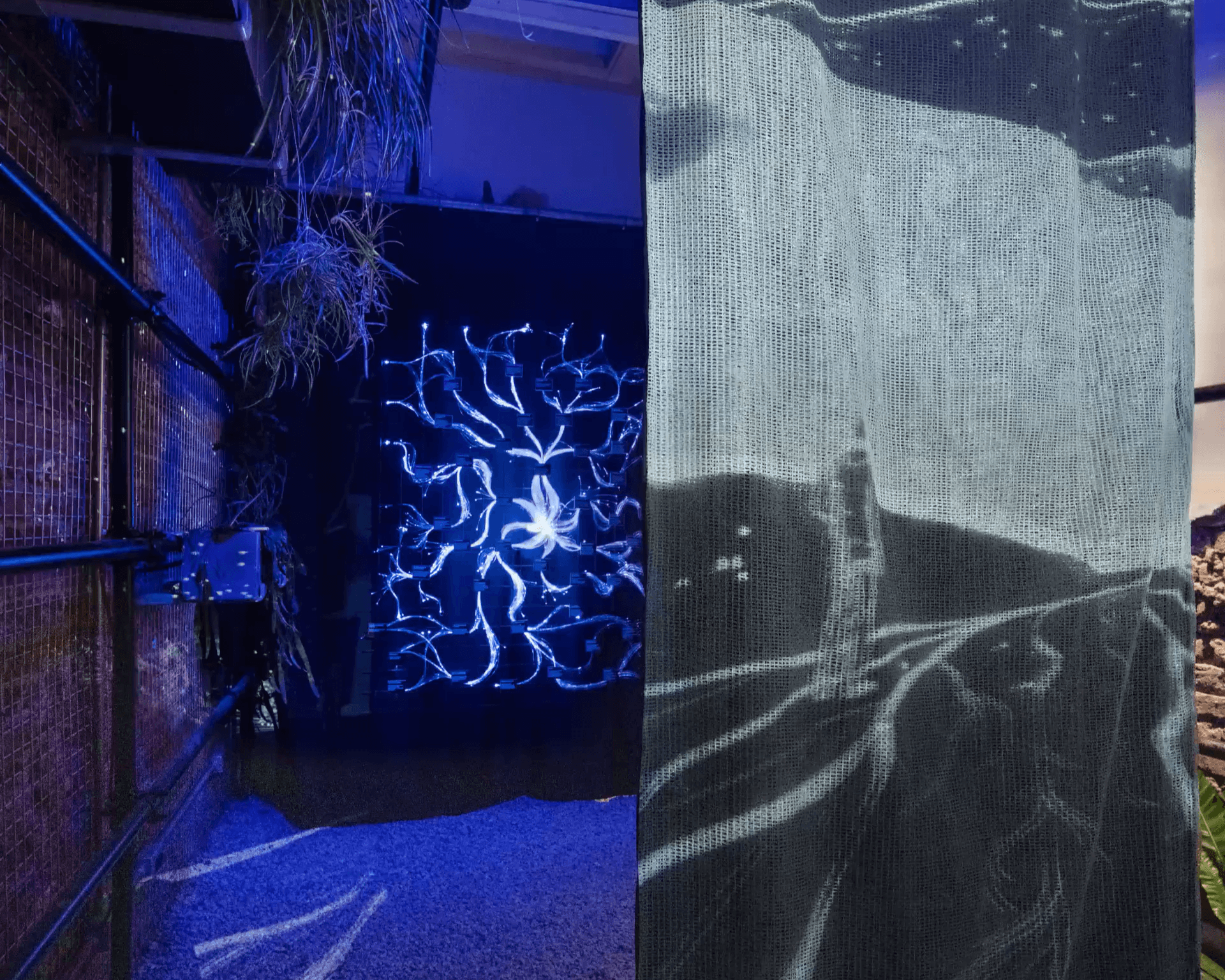
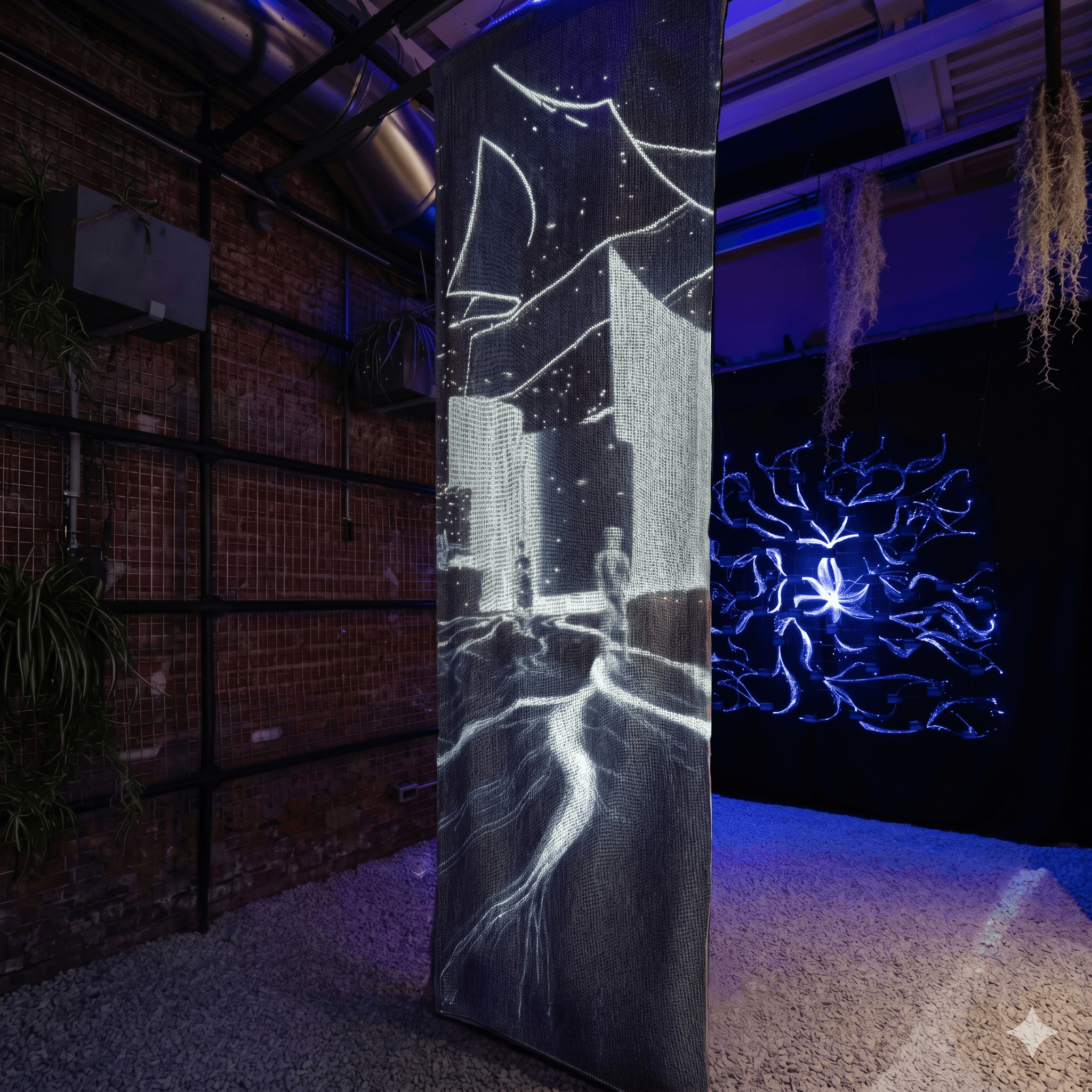
Before entering this "neural network" of data, visitors pass through a semi-permeable membrane featuring a projected preview of a pavilion designed from this very research. It is a visual manifesto: behind every architectural form exists a complex, breathing foundation of thought.
Commissioned by Il Prisma research team, this immersive light installation serves as a physical "landing" for a year-long study on regenerative architecture. Moving beyond the static nature of a thesis or book, the research is reimagined as a living organism.
At its core lie six fundamental questions regarding societal, environmental, and human impact. From this center, fiber optic filaments pulse outward, guiding visitors through a branching ecosystem of answers that lead to deeper inquiries.
Before entering this "neural network" of data, visitors pass through a semi-permeable membrane featuring a projected preview of a pavilion designed from this very research. It is a visual manifesto: behind every architectural form exists a complex, breathing foundation of thought.
Blender Geometry Nodes
Hands-on Crafting
Client / Il Prisma
Year / 2025
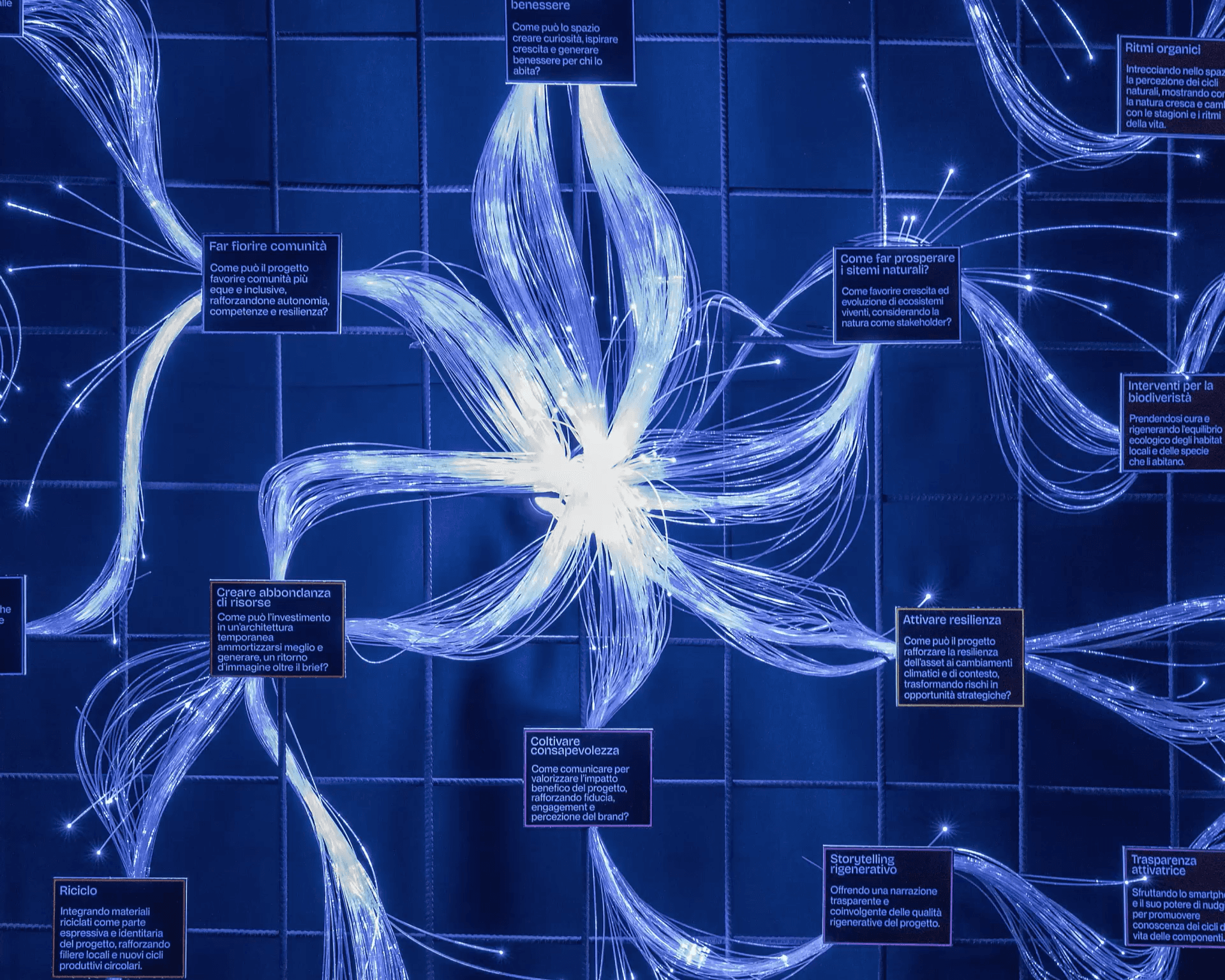
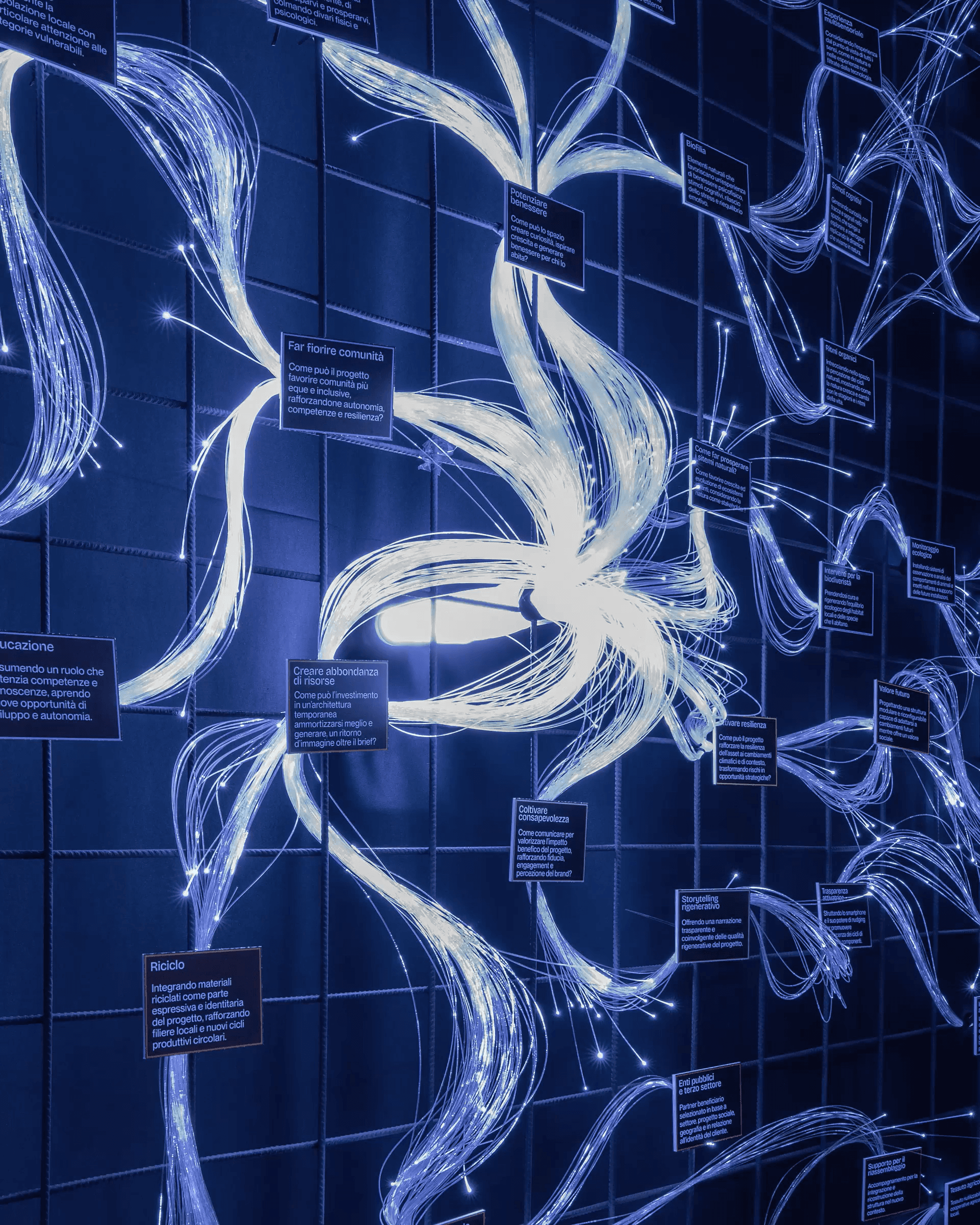



The Challenge: Organizing dozens of questions and answers into a branching structure that felt organic yet remained readable and logical for the visitor.
The Solution: I utilized generative 3D modeling (Blender Geometry Nodes) to simulate the growth of the installation. By simulating the branches to "grow" based on the relationship between data points, I ensured the final physical form was a direct reflection of the research ecosystem.
The Challenge: Organizing dozens of questions and answers into a branching structure that felt organic yet remained readable and logical for the visitor.
The Solution: I utilized generative 3D modeling (Blender Geometry Nodes) to simulate the growth of the installation. By simulating the branches to "grow" based on the relationship between data points, I ensured the final physical form was a direct reflection of the research ecosystem.